






Choosing a Mortgage Broker vs. Bank in Australia: Key Benefits

November 23, 2025

Understanding the Mortgage Landscape in Australia

When it comes to securing a home loan in Australia, potential homeowners are often faced with the choice between working with a bank directly or engaging a mortgage broker. Both options have their unique benefits and drawbacks, and understanding these can help you make a more informed decision.

The Role of Mortgage Brokers


Mortgage brokers act as intermediaries between borrowers and lenders. They have access to a wide range of loan products from different lenders, providing borrowers with more options. This diversity can be particularly beneficial for those with unique financial situations or those looking for better rates.


Benefits of Choosing a Mortgage Broker


There are several key benefits to working with a mortgage broker:


  • Personalised Service: Brokers offer personalised advice tailored to your financial situation and goals.
  • Wide Range of Options: Access to numerous lenders means more competitive rates and loan structures.
  • Time Savings: Brokers handle much of the paperwork and negotiation, saving you time and effort.

Working Directly with Banks


Choosing to work directly with a bank often means walking straight into a limited, self-serving environment. While it sounds appealing to "eliminate the middleman," what you're really eliminating is competition and choice, leaving you at the mercy of a single institution's restrictive terms.


The Bank Trap: Less Choice, Less Advantage


 A False Sense of "Streamlined": The process may seem "streamlined," but that often just means you're being rushed through a rigid, one-size-fits-all product designed for the bank's maximum profit, not your benefit.
The Myth of "Exclusive Deals": Any so-called "exclusive deals" offered to existing customers are typically designed to keep you locked into the bank's ecosystem. They are often not the most competitive rate available on the wider market; they are just the best rate that that specific bank is willing to offer its own clients. You sacrifice genuine savings for minor fee reductions.
Restricted Options: You are only shown products from that bank's limited shelf. You remain unaware of better features, lower rates, or more flexible terms that dozens of other lenders might be offering.


The Broker Advantage: Maximum Power to You 


In contrast, a mortgage broker acts as your powerful advocate, turning the lending process into a fiercely competitive arena that works for you.


Unbiased Market Access: A broker doesn't work for one bank; they access products from a vast panel of dozens of lenders, forcing them all to compete for your business.
The True Best Rate: They look beyond the bank's proprietary "deal" to find the genuinely lowest rate and most suitable structure available across the entire market, saving you potentially thousands of dollars over the life of the loan.
Expert Navigation: They handle the complex paperwork and know the specific criteria of each lender, preventing costly errors and securing an approval faster than you often could on your own.
Ultimately, going direct to a bank is limiting; using a broker is empowering.


Which Option is Right for You?


A Mortgage Broker provides market-wide access, ensuring you are not limited to the restrictive, self-serving products of a single bank. They act as your expert advocate, comparing rates and terms from dozens of lenders to secure the genuinely best deal and most suitable loan structure for your unique financial goals. This focused approach saves you significant time, money, and the frustration of navigating complex lending criteria yourself, proving that access to a broad choice and unbiased expertise is far more valuable than a bank's limited, in-house "loyalty" offer.


Consider Your Financial Situation


It's crucial to evaluate your financial situation carefully. Look at factors such as your credit score, existing relationships with financial institutions, and your comfort level with exploring multiple options.


Final Thoughts


Ultimately, both mortgage brokers and banks have their place in the home loan process. By understanding the key benefits of each, you can make a choice that best aligns with your financial goals and lifestyle. Whether you choose a broker or a bank, ensure you conduct thorough research and seek professional advice if needed.

By Into Finance Lending Solutions Client February 13, 2026
As the budget draft for 2026-27 is being drawn, one of the most hotly discussed pieces is the Labor Government talk to reduce the Capital Gain Tax discount on property sales. While revenue is required for a functioning country, the effect of this proposal will impact all Australians. Property investors while in the short term will hurry to sell their properties, in the long term they will hold onto their properties longer. For developers, the higher Capital Gain Tax margin will reduce the financial viability of these new building sites. Creating a knock-on effect on housing affordability, decrease in new home construction, decrease first-time home buyers, and increased housing shortages. Renters will also certainly feel this hit! With property investors unlikely to sell, the rental prices are sure to increase. Making it even more difficult for Australians to live the dream of having their own roof over their heads. The very thing the government is trying to increase with these changes. I'd propose getting a 100% discount on CGT for investment properties sold within the next five years. This will allow more stock to come onto the market, triggering a drop in house prices. Therefore, creating greater affordability through a flood of new properties in the market and reducing property prices.  #CGT #CapitalGainsTax #PropertyTax #RealEstateTax #HousingTax
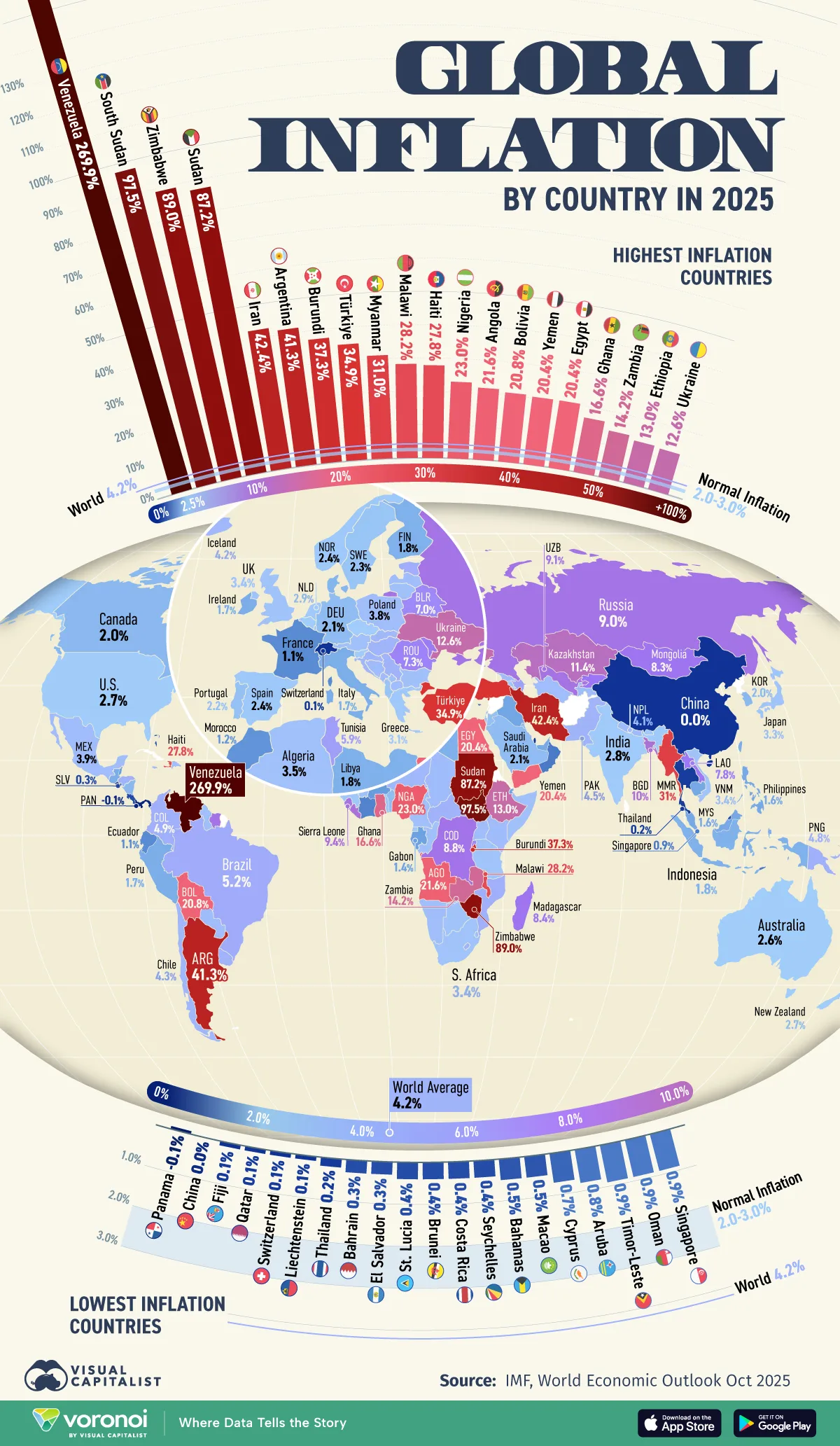
Global map showing inflation rates by country in 2023, with red bars representing high rates — Into Finance Lending Solutions in Harrington, NSW

By Into Finance Lending Solutions Client January 13, 2026
Global I nflation in 2025: What It Means for Australian Borrowers  Inflation remains one of the most closely watched economic indicators in 2025, shaping central bank decisions and influencing household budgets worldwide. The latest data from the International Monetary Fund (IMF) and the Reserve Bank of Australia (RBA) paints a complex picture of global and domestic inflation trends and what they mean for mortgage holders and prospective buyers. Global Inflation Trends According to the IMF, global inflation peaked at 9.6% in September 2022 and has been on a downward trajectory since. By September 2025, the global average stood at 3.6%, with advanced economies and emerging markets both experiencing a slowdown in price growth. However, the decline is uneven: Venezuela leads with a staggering 269.9% inflation rate. Sudan, Zimbabwe, and Iran also face double-digit inflation. On the other end, China, Panama, and Switzerland report near-zero inflation. This disparity reflects differing monetary policies, geopolitical pressures, and economic resilience across regions. Australia’s Inflation Outlook Domestically, the RBA reports that both headline and underlying inflation have eased into the target range of 2–3%. As of late 2025, Australia’s inflation rate sits at 3.4%, slightly above target but significantly lower than the global average. Key drivers include: -Easing supply chain constraints -Stabilizing energy prices -Softer labour market conditions RBA Policy Response The RBA has maintained the cash rate at 3.6% throughout the second half of 2025. While inflation is moderating, the central bank remains cautious, signalling that future rate decisions will depend on: -Wage growth trends -Consumer spending resilience -Global economic risks Implications for Mortgage Holders For Australian borrowers, this environment presents both challenges and opportunities: 1. Refinancing Windows With rates stable, now may be a strategic time to refinance before any potential hikes in 2026. 2. Fixed vs. Variable Decisions Borrowers should reassess whether their current loan structure aligns with their risk tolerance and financial goals. 3. Inflation-Proofing Your Budget Even modest inflation can erode purchasing power. Reviewing household budgets and loan repayments is essential. Final Thoughts While global inflation remains volatile, Australia’s relatively stable outlook offers a degree of certainty for homeowners and buyers. Staying informed and proactive is key and working with a mortgage broker can help navigate these shifting conditions with confidence. For tailored advice or a loan health check, reach out anytime.

Australian banknotes fanned out, primarily green $100 bills, showing currency — Into Finance Lending Solutions in Harrington, NSW
January 12, 2026
Why an Offset Account Can Be a Game‑Changer for Your Home Loan
Toy House and Key on Top of a Graph — Into Finance Lending Solutions in Coomba Bay, NSW
November 17, 2025
Understanding the Importance of Trusted Mortgage Consultants When it comes to securing a home loan, choosing the right mortgage consultant in NSW can be cr

People at Table With House Model — Into Finance Lending Solutions in Coomba Bay, NSW
November 17, 2025
Understanding the Role of a Mortgage Broker When it comes to purchasing a home in NSW Midcoast region, finding the right mortgage broker can make all the d

Aerial View of a Suburban Neighborhood — Into Finance Lending Solutions in Coomba Bay, NSW
November 17, 2025
Buying your first home is both exciting and daunting. One of the first steps is determining your budget. This involves assessing your current financial situation